
Storage Systems
Slotted Angle Racks for Stock Rooms: A Complete Guide
Learn how slotted angle racks help stock rooms, offices, workshops and spare-parts stores organize inventory with adjustable and expandable storage.
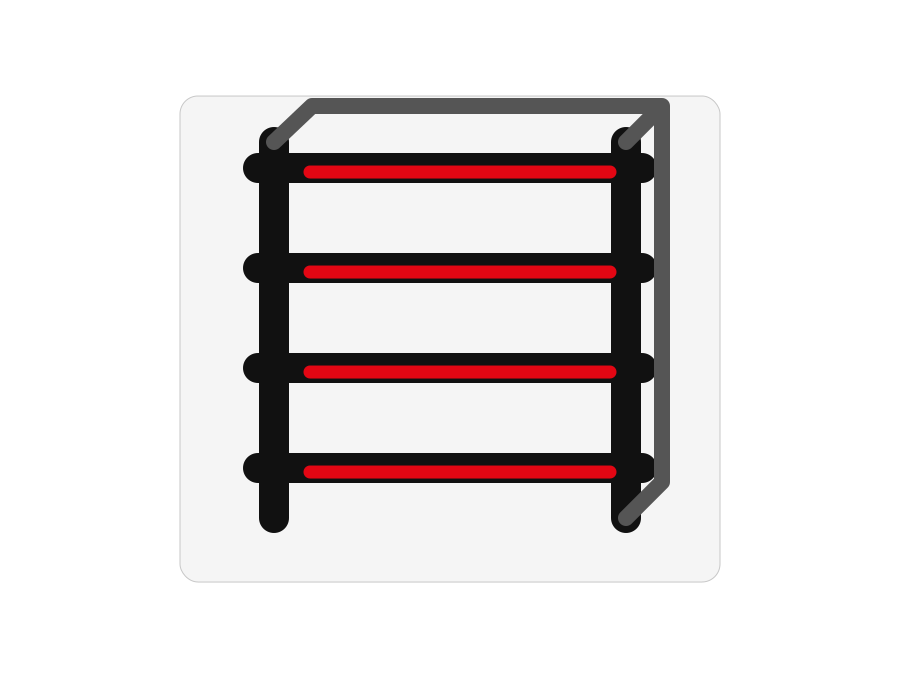
Why stock rooms become difficult to manage
A stock room usually starts with good intentions. A few cartons are kept aside, files are stacked neatly, spare parts are grouped together and extra products are placed wherever space is available. Over time, categories grow, packaging changes and staff members use the space differently. Without proper racks, the stock room turns into a pile-based system where items are technically present but difficult to find. This slows down sales, service and inventory control.
Slotted angle racks solve this problem by creating defined shelf levels and repeatable storage bays. They are especially useful for cartons, files, hardware, tools, office records, pharmacy stock, spare parts and mixed inventory. Because the shelf levels can be adjusted, the same rack can be used for different item heights over time. This makes slotted angle racks a practical choice for businesses that need organized storage without committing to a very heavy warehouse system.
Adjustability is the main advantage
The biggest strength of a slotted angle rack is flexibility. Shelves can be placed at different heights, bays can be added, and partitioned sections can be created for categories that need separation. For a business with changing inventory, this matters a lot. A fixed rack may work for today’s carton size but become inconvenient after product packaging changes. An adjustable rack gives the owner more room to adapt.
This flexibility is useful in many spaces. Offices use slotted angle racks for files and records. Workshops use them for tools and spare parts. Retail stock rooms use them for backup inventory. Small warehouses use them for organized cartons. Hardware stores use them for mixed products that need separation. The design is simple, but the impact on daily work can be significant because staff can find, count and retrieve items faster.
Load planning still matters
Adjustable does not mean unlimited. Every rack should be planned according to the expected load. Light files, packaged goods and cartons require one type of planning, while metal parts, tools and industrial material require stronger sections and shelf support. If heavy items are stored on shelves that were planned for light goods, bending and instability can occur. That is why load discussion should happen before manufacturing.
A good layout places heavier material lower and lighter material above. It also keeps frequently used items at accessible height. If the rack will be used by multiple staff members, labels and partitions can reduce confusion. For very heavy stock, a different heavy-duty rack may be better than a basic slotted angle system. The right manufacturer will help decide where slotted angle racks are suitable and where another storage method is safer.
Use partitions and labels for speed
The value of a stock room is not only how much it stores, but how quickly a person can find the right item. Slotted angle racks become more useful when combined with partitions, labels and category planning. A rack bay can be divided by product type, size, customer, project or frequency of use. This prevents different items from mixing and reduces the chance of stock being forgotten at the back.
Labeling does not need to be complicated. Even simple shelf labels, bay numbers or category names can improve discipline. If inventory is counted regularly, consistent rack positions make counting easier. For businesses that handle repairs, service work or hardware items, organized racks can reduce daily frustration. The staff knows where things belong, and the owner gets better control over stock movement.
Plan expansion before the room is full
A stock room should not be designed only for the stock present today. Most businesses grow, change suppliers, add categories or store seasonal items. If there is no expansion plan, the room becomes crowded again after a few months. Slotted angle racks are useful because additional bays can often be matched later, but only if the first layout leaves sensible movement space and follows repeatable dimensions.
Before ordering, measure the room, door opening, ceiling height and any columns or electrical points. Decide which items need fastest access and which can sit in less active zones. Keep some room for future categories. For Indore businesses with limited commercial space, a well-planned slotted angle rack system can turn a messy back room into a dependable storage area that supports the front-end business every day.
Avoid the common stock room mistakes
The most common mistake is placing racks wherever there is empty wall space without thinking about movement. Another mistake is using all shelves at the same height even though inventory sizes are different. A third mistake is mixing unrelated categories because the rack has no labels or partitions. These issues seem small at first, but they slowly make the stock room harder to use.
A better approach is to divide the stock room into zones. Fast-moving items should be closest to the working area. Heavy items should stay lower. Rarely used items can sit higher or deeper inside. Files, spare parts and cartons should not share the same bay unless there is a clear reason. Slotted angle racks are flexible enough to support this kind of planning when the layout is decided carefully.
Use the right shelf material and finish
Slotted angle racks can be made for different load levels and storage styles. The shelf material, frame strength and finish should match the inventory. A rack used for office records does not need the same strength as a rack used for tools or dense hardware items. Powder coating helps the rack stay cleaner and more presentable, especially in commercial spaces where dust and handling are regular.
Finish quality matters because stock rooms are used every day. Rough edges, unstable shelves or uneven levels slow staff down and create safety concerns. A simple rack can still be well made. When comparing options, check stability, shelf support, coating quality and whether the layout can accept extra shelves later.
Make inventory checks easier
Inventory checking is easier when racks are consistent. If each bay has a purpose, counting becomes faster and mistakes reduce. For businesses with many small items, partitions and drawer-style storage may be needed alongside slotted angle racks. For carton storage, clear bay labels may be enough. The rack system should match the level of control the business needs.
A well-planned stock room can improve cash flow because owners know what is available, what is slow-moving and what needs reorder. Steel racks may look like a storage expense, but in a busy business they support better purchasing decisions. Organized stock means fewer duplicate orders, fewer missing items and faster customer service.
Final stock room checklist
Before ordering slotted angle racks, list the items that will be stored, their approximate weight, carton size, frequency of use and required shelf height. Measure doorways and walking paths, not only wall lengths. Decide which categories need partitions, which need labels and which should stay closest to the working area. This prevents a clean new rack from becoming a confusing pile after a few weeks.
If the stock room supports a shop, connect the back-room plan with the sales-floor plan. Fast-moving display products should have refill stock nearby. Slow-moving items can sit in less active zones. Files and office material should not compete with retail cartons. A slotted angle rack system works best when every shelf has a reason and every category has a home.
Ask the manufacturer whether your requirement needs normal slotted angle racks, partition racks, drawer storage or heavier-duty alternatives. Many stock rooms need a combination. Files may sit well on simple shelves, small parts may need drawers or bins, and cartons may need wider bays. Choosing the right mix makes the space more useful than filling the room with identical shelves.
After installation, create a basic rule for where items belong. Even the best rack can become messy if staff keep changing positions without a system. Label shelves, keep heavy items low and review the layout after a few weeks of use. Small corrections early can keep the stock room organized for years.
Train staff to use the system
A slotted angle rack system becomes far more effective when staff understand it. After installation, walk the team through each bay and explain why items are placed there. Show where fast-moving stock belongs, where heavy cartons should stay and how labels should be followed. If staff understand the logic, they are more likely to maintain the system during busy days.
This training does not need to be formal. A simple ten-minute explanation can prevent months of confusion. The owner or manager should also review the stock room occasionally and correct small mistakes before they become habits. Organized racks and consistent staff behavior work together. One without the other will not produce the same benefit.
When new categories are added, update the rack labels and shelf positions instead of forcing new stock into old spaces. This keeps the system alive. A stock room is never truly finished; it should keep matching the business as products, suppliers and customer demand change. That discipline keeps the room useful long after installation day.
For growing businesses, this is often the difference between a stock room that supports sales and a stock room that quietly slows everyone down.