
Industrial Storage
Industrial Storage Racks: Safety and Planning Guide
A long-form guide to planning industrial storage racks for warehouses, factories, hardware stock and bulk material with safety and access in mind.
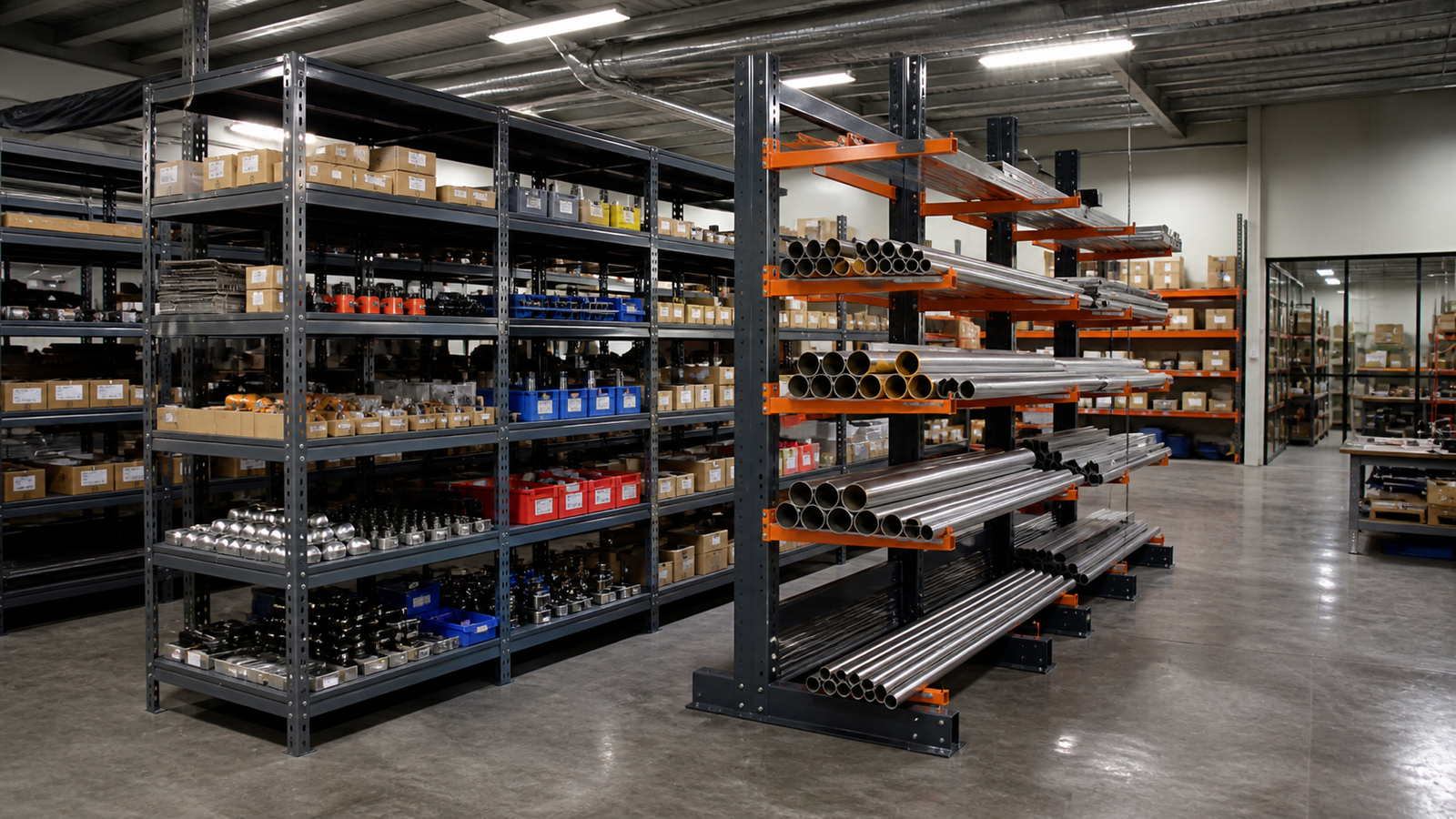
Industrial racks are part of the workflow
Industrial storage racks are often treated as background equipment, but they directly affect safety, speed and space usage. In a warehouse, factory, hardware business or bulk material store, racks decide how inventory is received, stored, found and moved. Poor rack planning creates blocked aisles, unsafe stacks, slow retrieval and damaged material. Good rack planning creates clear locations, predictable movement and safer handling.
The first step is understanding the workflow. What arrives daily? What leaves daily? Which items are heavy, long, fragile or awkward? Which items need quick access and which can stay in reserve storage? A rack layout should follow this movement. If fast-moving stock is placed deep inside the store, staff waste time. If heavy material is placed too high or too far from handling space, safety suffers. The rack system should support the way the business actually works.
Load capacity must be discussed honestly
Industrial racks must be planned around real load requirements. It is risky to guess or understate weight only to reduce cost. Shelf strength, upright sections, bracing, bay width and anchoring decisions all depend on load. A rack used for light cartons is different from a rack used for metal parts, pipe, hardware stock, machine components or dense bulk material. Even within one warehouse, different zones may need different rack strengths.
A practical approach is to identify the heaviest item per shelf, expected total load per level and how items will be placed. Will staff load by hand, trolley or equipment? Will material be dragged, slid or lifted? Is the floor level and strong enough? Are racks placed near walls or open aisles? These questions may feel technical, but they prevent expensive and unsafe mistakes. A strong rack is not just thicker steel; it is a system designed for the load and handling method.
Aisle width affects safety and speed
Industrial storage needs enough aisle space for people and material movement. If aisles are too narrow, staff may hit racks, struggle to remove items or create temporary piles in walking areas. If aisles are too wide, valuable storage space may be wasted. The correct aisle width depends on item size, handling method and frequency of movement. A small workshop may need hand access, while a warehouse may need trolley or equipment clearance.
Clear aisles also improve inventory discipline. When staff can easily reach the correct rack, they are more likely to put items back properly. When access is difficult, items are left wherever space is available. Over time, this creates clutter and safety risks. Good rack planning makes the correct action the easy action. Labels, bay numbers and logical category placement can further improve speed.
Use the lower levels wisely
Lower rack levels are the safest and most convenient place for heavy or fast-moving material. Placing heavy items at lower levels reduces lifting strain and improves stability. Upper levels can hold lighter or slower-moving items. This simple rule helps many warehouses and industrial stores become safer immediately. It also makes training easier because staff understand the logic of the layout.
However, lower levels are limited, so they should be reserved for the right categories. If slow-moving light items occupy the easiest positions, staff waste effort handling heavy products from inconvenient spots. During planning, mark products by movement frequency and weight. The best positions should go to items that are both heavy and frequently used. This makes the rack system serve operations rather than simply store material.
Plan for inspection and future changes
Industrial racks should be inspected periodically for bending, loose parts, impact damage, overloading and poor placement. Even a strong rack can become unsafe if used incorrectly. Staff should know not to overload shelves beyond planned capacity and not to climb racks. Clear labeling and sensible shelf spacing reduce misuse. If racks are shifted later, they should be rechecked for stability.
Future change is also important. Businesses add products, increase stock and change handling methods. A rack layout that cannot adapt may become inefficient. Modular planning, repeatable bay sizes and proper documentation make expansion easier. For warehouses and industrial businesses in Indore, working with a manufacturer who understands local site constraints can help when racks need additions, matching units or layout changes. Industrial storage is not only about holding more; it is about holding material in a way that keeps work moving safely.
Separate storage by risk and handling difficulty
Industrial material is not all handled the same way. Some items are heavy, some are sharp, some are long, some are fragile and some are frequently moved. Mixing all of them into one rack style can create problems. Long material may need pipe or cantilever-style planning. Dense boxes may need stronger shelf support. Small parts may need bins, drawers or partitions. A good industrial rack plan separates material by risk and handling difficulty.
This separation improves safety and speed. Staff know which rack is meant for which material, and the rack is built for that material’s behavior. Heavy or awkward items should not be stored where they require difficult lifting. Fragile items should not sit under heavy stock. Fast-moving items should not be blocked by slow-moving material. These rules sound simple, but they prevent many daily problems.
Think about loading method
The way material is placed onto racks affects rack design. Hand-loaded racks can have different dimensions than racks loaded with trolleys or equipment. If staff slide material onto shelves, shelf edges and supports need to handle repeated friction. If cartons are lifted manually, shelf height should reduce strain. If items are moved in batches, aisle space and staging areas matter.
Before ordering industrial racks, describe the loading method honestly. A manufacturer can then suggest shelf spacing, bay width, bracing and layout adjustments. This is much better than ordering generic racks and discovering later that staff cannot use them comfortably. Industrial storage should reduce effort, not add hidden labor.
Document the rack plan
Once an industrial rack layout is finalized, keep a simple record of bay sizes, intended load, category placement and future expansion notes. This helps when new staff join, when more racks are ordered or when the layout is reviewed. Documentation does not need to be complicated. Even a marked drawing or zone list can prevent confusion later.
A documented rack plan also supports safer use. If staff know what each rack was designed for, they are less likely to overload it or use it for the wrong material. As the business grows, the document becomes a reference for improving the storage system instead of starting from scratch. Good industrial storage is a working system, and every system benefits from clarity.
Final safety checklist
Before ordering industrial racks, confirm load per shelf, total bay load, material type, handling method, aisle width, floor condition and future expansion requirement. Keep heavy and frequently moved items in safer lower positions. Plan labels, bay numbers and category zones before the racks are filled. If staff will use trolleys or equipment, check turning space and loading space carefully.
After installation, treat the rack system as part of operations. Inspect it regularly, correct overloading, keep aisles clear and update the layout when inventory changes. Industrial storage racks should make work faster, but speed should never come at the cost of safety. A well-planned rack system protects material, supports staff and gives the business more usable space without chaos.
When discussing industrial racks with a manufacturer, share the heaviest expected items, how they are packed and how workers will move them. Mention whether items are loaded by hand, trolley or equipment. Also explain whether the racks are for a factory, warehouse, hardware business or mixed industrial store. These details help the manufacturer avoid unsafe assumptions and design a rack that matches real use.
Industrial storage should be reviewed as the business grows. A layout that worked for one product mix may not suit a new category or higher stock volume. Instead of waiting until the area becomes crowded, schedule improvements when inventory patterns change. This keeps storage safe, usable and ready for expansion.
Make safety visible
Industrial rack safety improves when rules are visible. Mark rack zones, label heavy sections and make it clear which materials belong where. If a shelf is intended for lighter goods, staff should not have to guess. Visible organization reduces misuse and helps new workers understand the system faster. It also makes inspections easier because problems stand out quickly.
A tidy industrial rack area sends a message about the business. It shows that material is controlled, staff movement is planned and safety is taken seriously. This matters in factories, warehouses and hardware operations where small mistakes can become costly. The rack system should support a culture of order, not merely provide more places to stack material.
If a rack area begins to look crowded again, treat it as a signal to review inventory flow rather than simply adding more shelves. Sometimes the solution is better category placement, clearer labels or removing dead stock. Strong racks work best when the operating system around them is also disciplined.