
Buying Guide
How to Choose Steel Racks for Your Shop
A detailed buying guide for choosing steel racks based on product weight, shop size, shelf depth, display style, finish quality and future expansion.
Start with the products you actually sell
The best steel rack for a shop is not chosen from a catalogue first. It is chosen from the products that will sit on it every day. A grocery shop, pharmacy, hardware store and garment showroom may all use steel racks, but the rack depth, shelf spacing, finish and load requirement can be very different. Before ordering racks, make a simple list of your main product categories, the weight of each category, the size of cartons or packets, and how often the shelf will be restocked. This gives the manufacturer a practical starting point instead of a vague request for a standard rack.
For light retail items such as packets, bottles, cosmetics, stationery or FMCG products, visibility and shelf access matter as much as strength. For heavier items such as tools, machine parts, paint containers, hardware boxes or bulk grocery cartons, the frame, shelf thickness and bracing become more important. If the same rack has to handle both display and storage, it should be designed with stronger lower shelves and cleaner upper display levels. Thinking this through early prevents bending shelves, crowded aisles and racks that look good on day one but feel inconvenient after the first month of use.
Measure space before deciding rack size
Many shop owners choose rack size by looking at wall length, but a good layout also considers aisle width, counter position, customer movement and staff restocking space. If racks are too deep, the store may hold more stock but feel cramped. If racks are too shallow, products may look neat but stock capacity suffers. A practical retail layout usually balances wall racks, center display racks and counter storage so that customers can move comfortably while the owner still gets maximum use of the floor area.
Measure the usable wall height, available depth, entry path, billing counter area and any columns or shutters before finalizing racks. In small shops, even a few inches can change the walking experience. In larger showrooms, modular rack bays make the layout easier to expand later. If the business may add new product categories in the future, adjustable shelves are safer than fixed shelves. A manufacturer can also plan different depths for different zones, such as deeper storage behind the counter and cleaner display racks near the entrance.
Choose the right rack type for the shop format
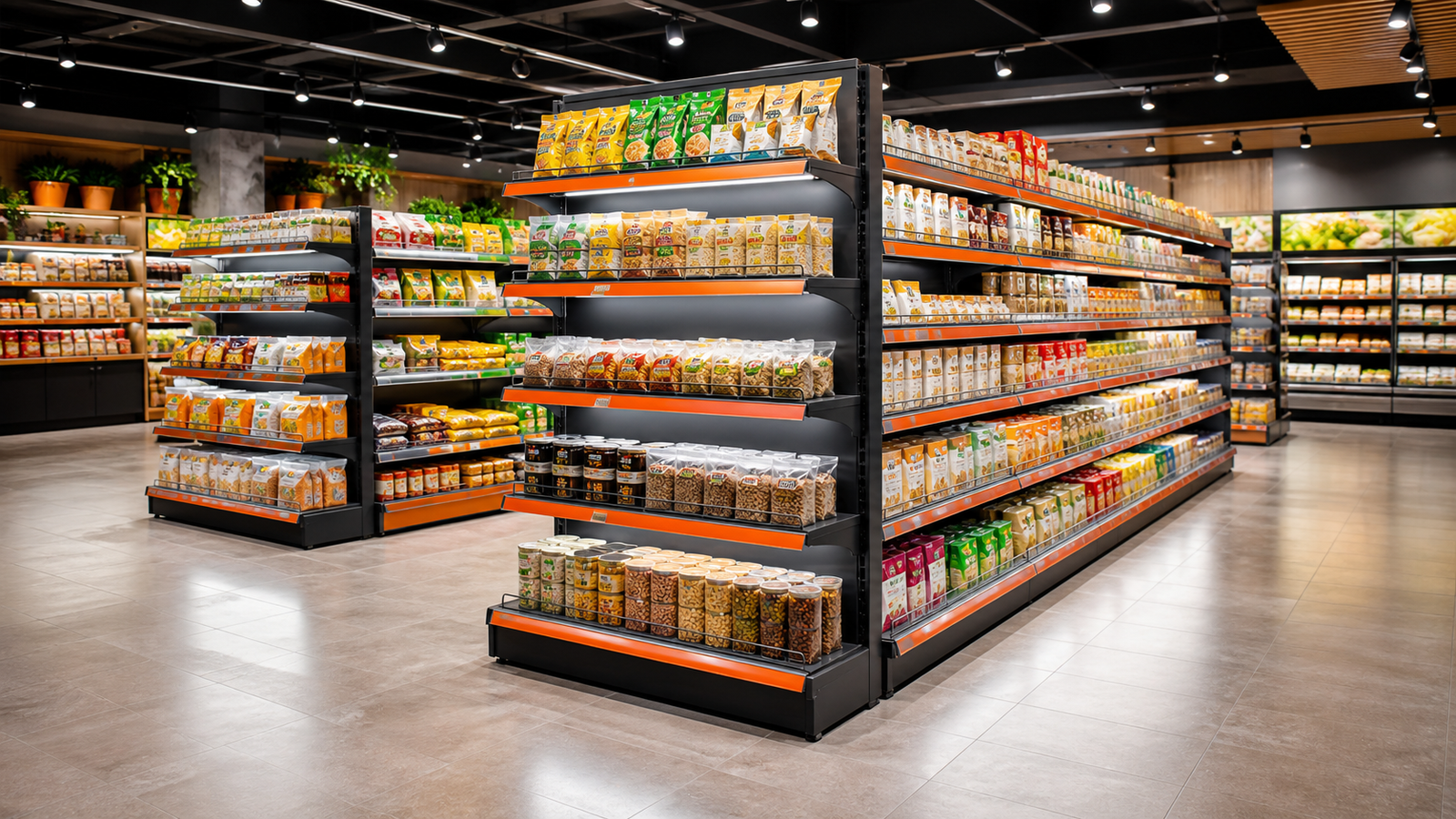
Wall display racks are useful when you want to keep products visible along the boundary of the shop. Center racks or gondola racks are useful for supermarkets, grocery stores and general retail because they create aisles and allow shopping from both sides. Slotted angle racks are better suited for stock rooms, files, cartons and workshop storage. Counters and pharmacy cabinets combine storage with customer interaction, so the front finish and internal drawer planning matter a lot. Choosing one rack type for every area is rarely the best decision.
A shop that looks organized usually has a mix of rack systems. For example, a pharmacy may need wall cabinets, glass-front display, billing counter storage and back-room stock racks. A grocery store may need wall racks, center gondolas, end-cap racks and deeper lower shelves for heavy goods. A hardware store may need heavy-duty storage, small-parts sections, drawer cabinets and front display. The goal is not to buy the most expensive rack; the goal is to match each area with a rack that solves that area’s problem.
Check material, finish and long-term maintenance
Steel racks are expected to handle daily loading, cleaning, shifting and customer contact. That is why the material and finish matter. Powder-coated steel is popular because it gives a clean appearance and better surface durability for commercial use. The finish should be even, edges should be safe to touch, shelves should sit properly, and the rack should not wobble after installation. For retail spaces, black, white and grey are common choices, while brand colors can be used where the store wants a more customized look.
Maintenance should also be part of the decision. Racks with unnecessary corners, weak joints or poor finishing collect dust and become difficult to keep clean. In a pharmacy, grocery store or showroom, clean presentation directly affects trust. In a warehouse or workshop, maintenance affects safety and speed. Ask how the rack will be packed, transported and installed. Also check whether extra shelves, hooks, partitions or matching units can be made later. A rack system is a long-term business fixture, not a one-time decoration.
Plan for growth instead of only today’s stock
A common mistake is buying racks only for current stock. Most active shops change categories, add products, increase inventory or rearrange layouts after learning customer behavior. If the first rack plan is too rigid, every future change becomes expensive. Modular bays, adjustable shelves, removable hooks and repeatable sizes make growth easier. Even if the initial order is small, the design should allow the same rack style to continue when the shop expands.
Good rack planning also makes quoting easier. When you know the product categories, rough weight, wall lengths, preferred color and display style, the manufacturer can suggest a better solution quickly. For businesses in Indore, working with a local steel rack manufacturer helps because measurements, changes and future additions are easier to discuss. The right rack should make the shop look better, hold products safely and support daily work without constant adjustment.
Understand cost beyond the first quote
When comparing steel rack quotations, do not look only at the final number. A lower price can sometimes mean lighter material, fewer supports, thinner shelves, weaker finishing or a layout that does not use the shop properly. The real cost of a rack includes how long it lasts, how well it handles daily loading, how much stock it displays, how easy it is to clean and whether it can be expanded later. A rack that needs replacement or repair quickly becomes more expensive than a stronger rack purchased once.
Ask what is included in the quote. Check whether delivery, installation, extra shelves, hooks, partitions, color finish and custom sizing are included or separate. For a new shop, it can be useful to divide the purchase into essential racks and future add-ons. That way the first setup stays within budget while the design remains consistent for later expansion. A good manufacturer can suggest where to spend more and where a simpler rack is enough.
Use racks to improve the buying experience
Good steel racks do more than store products. They help customers understand the shop. Clean category separation, comfortable shelf height, visible products and uncluttered aisles all create trust. In competitive retail areas, the shop that feels easier to browse often gets more repeat customers. Strong racks, neat displays and practical counters quietly improve the customer’s confidence in the business.
For local searches such as steel racks near me or steel racks in Indore, many buyers are looking for someone who can understand their shop quickly and provide a practical solution. The best rack choice is therefore not only technical. It is a business decision about presentation, daily speed, stock control and long-term growth.
Final checklist before ordering
Before placing an order, confirm the wall measurements, preferred rack height, shelf depth, product categories, expected load, color finish and installation conditions. Decide whether the rack should prioritize display, storage or both. Check whether the manufacturer can make matching units later, because future additions look better when they follow the same design language. Also confirm how the rack will be delivered and whether the path to the shop allows easy movement of larger units.
Do not hesitate to ask for practical suggestions. A manufacturer who regularly builds steel racks can often notice layout issues that a first-time buyer may miss. They may suggest changing shelf depth, reducing height, adding a counter, using a different rack type or keeping more aisle space. These small decisions can improve the shop for years. The best rack purchase is one where the owner, staff and customers all feel the difference in daily use.
Contact a manufacturer when you can explain your products, approximate stock volume and shop plan clearly. You do not need a perfect drawing, but you should know what the racks must achieve. Share photos, measurements and examples of rack styles you like. Ask for a solution that balances appearance, strength and budget. This makes the final rack system feel designed for your business rather than copied from another shop.